From NRW to global screens: met[ads] focuses on 3D advertising
Technological advancements are constantly opening up new possibilities for digital out-of-home advertising, allowing brands and products to be showcased in public spaces. The Düsseldorf-based company met[ads] specializes in 3D campaigns, creating content with spatial effects and designs adapted to different digital advertising spaces. The company offers concept development and 3D design, including rendering, data and technical playback on digital screens, all from a single source.
Lukas Flöer founded met[ads] in September 2023 after working in the advertising industry for several years. What began as a team of four has grown into a company of 20 employees. To date, met[ads] has implemented over 200 campaigns. Its 3D content isn’t just visible on large advertising spaces in Germany; met[ads]’s expertise is also in demand internationally. A notable achievement was securing a test slot in Times Square in New York to promote its own 3D content.
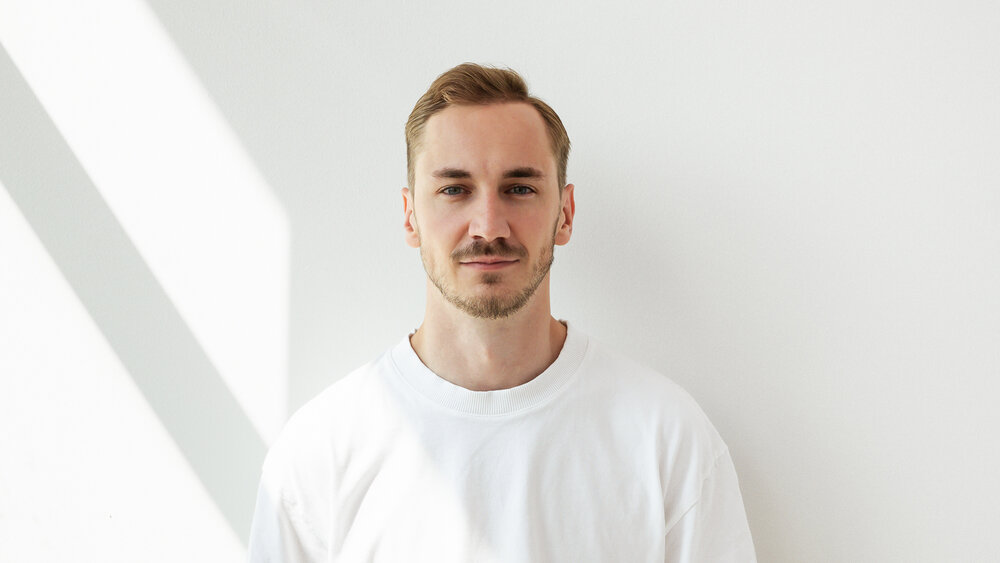
In an interview with NRW.Global Business, founder Lukas Flöer discusses his journey to setting up and developing his own company. He also explains how NRW has played a role in the company’s growth, how met[ads] is tapping into international markets, and his vision for the future of digital outdoor advertising.
With met[ads], you combine 3D creation, data and technology into a creative tech approach. What did you want to do differently from traditional advertising agencies and outdoor advertising companies? What is the core of your business model today?
I worked in the industry for nine years before founding the company. The answer to every problem was always the same: more billboards, more contacts, higher frequency. Hardly anyone at talked about the “how”. But reach is meaningless if no one remembers the ad by the end of the day. To be effective, advertising must appeal to people and stand out. To achieve that, you have to think about it from the perspective of the people walking past the billboard.
Traditionally, the process is divided into three parts. The agency provides the idea, a studio handles production and the outdoor advertising company provides the space. Each point of contact costs time and money, and ultimately, quality suffers. With 3D, this division doesn’t work. An anamorphic image must be recalculated for each individual screen because the viewing angle and distance determine the effect. This is why creation and screen placement belong under one roof.
That’s our core. We model, texture and animate. We adapt each motif to the respective screen and play it back via our own 3D ad server. Clients simply send us what they have, whether it’s a TV commercial, print ad, or social media asset. We take care of the rest. This significantly lowers the barrier to entry. And we’re fast. From approval to go-live, it takes us just a few days. Our goal remains the same: to eliminate boring advertising from these platforms.
At met[ads], data, proprietary software solutions and artificial intelligence support various work steps. In what ways are new technologies changing the development of advertising campaigns, and in which areas do you still consider human creativity indispensable?
At met[ads], AI handles the tedious work. Our models run locally because we don’t want client material sent through third-party systems. This enables us to create a complex 3D ad in about five days – a process that used to take months. The system automatically adjusts lighting and depth effects to suit each specific ad space. So we’re not working here with the widely used “generative AI” as seen in ChatGPT and similar tools, but rather with our own software, which gives our designers the opportunity to focus on what really matters. The second key factor is data. For every screen, we need the actual viewing angle of passersby; otherwise, there’s no spatial effect.
Technology can’t decide whether an idea really works. A 3D surface doesn't make up for a mediocre idea. People either stop or keep walking; there’s nothing in between. That initial spark is what decides that one second, and no model can provide that. That’s why 15 out of 20 people at our company work in creative roles. AI makes them faster. It won't replace them.
Your professional career in the advertising industry began in NRW, and you’ve remained loyal to the region with met[ads]. What advantages does NRW offer for building and further growing a creative and technology company?
My career started here. At 17, I began as an intern at a media agency in Frankfurt and moved to Düsseldorf shortly afterward. Then I transitioned into marketing. If you want to learn the ropes of this industry, the Rhine region is the place to be. Media agencies, marketers and advertisers are all concentrated in a small area. Ströer in Cologne, RTL in Cologne, Vodafone and Douglas in Düsseldorf. I can get to any important meeting in half an hour.
Then there’s the talent pool. We’re looking for 3D artists and motion designers from the gaming and VFX industries. NRW's higher education landscape provides exactly that.
The metropolitan area itself is our testing ground. The Rhine-Ruhr region is the most densely populated in Germany. If you run a campaign here, you can determine within a few days whether a format works. We’ve grown from four to 20 people without changing locations. Recently, however, we moved a few streets over to a larger office in the Medienhafen district.
met[ads] has already made the leap into the international market and has even been featured in Times Square. How has the journey evolved from the first projects in Germany to international advertising spaces? What challenges have you overcome along the way, and what’s next for met[ads] on its international journey?
Our first international assignment came through an existing client who wanted to replicate the concept in another market. And that's pretty much how it's worked ever since. We’ve always adapted to our clients’ wishes. Our ads are now running on the Outernet in London, among other places – one of the largest LED screens in the world.
Times Square was a special case. I’ve been dreaming about that ever since I started working in advertising. So we booked a test slot there and ran our own 3D content, without any clients behind us.
The challenge is seldom the creative work itself, but rather the screen space. Each screen has its own specifications and requires its own approvals. In a new market, you first need to find someone willing to sell you a slot as a German provider. Then there’s our financing. We’re intentionally growing beyond our cash flow without investor funding. This forces us to open markets one at a time instead of all at once. Most recently, we had 3D campaigns running simultaneously in 11 countries.
met[ads] hat den Schritt ins internationale Geschäft bereits gemacht und war auch schon auf dem Times Square zu sehen. Wie hat sich der Weg von den ersten Projekten in Deutschland zu internationalen Werbeflächen entwickelt? Welche Herausforderungen mussten Sie dabei bewältigen, und wo soll die internationale Reise von met[ads] als Nächstes hingehen?
Der erste internationale Auftrag kam über einen Bestandskunden, der dieselbe Idee in einem weiteren Markt wollte, und so läuft es bis heute meistens. Wir haben uns hier immer unseren Kundenwünschen angepasst. Inzwischen laufen unsere Motive unter anderem am Outernet in London, eine der größten LED-Flächen der Welt.
Der Times Square war ein Sonderfall. Davon habe ich geträumt, seit ich in der Werbung arbeite. Also haben wir uns dort einen Test-Slot gebucht und eigene 3D-Inhalte gespielt, ohne Kunden im Rücken.
Schwierig ist dabei selten die Kreation, sondern die Flächen. Jeder Screen hat eigene Spezifikationen und eigene Genehmigungen. In einem neuen Markt braucht man erst einmal jemanden, der einem als deutschem Anbieter überhaupt einen Slot verkauft. Und dann ist da unsere Finanzierung. Wir wachsen bewusst aus dem Cashflow, ohne Investorengeld. Das zwingt uns, Märkte nacheinander zu öffnen statt alle gleichzeitig. Zuletzt hatten wir 3D-Kampagnen in 11 Ländern parallel live.