Research vessel NOVA tests automated shipping
Waterway freight transport is a significant economic factor for NRW. However, the industry faces several challenges. Transport must become more climate friendly. A shortage of skilled workers is hindering operations. Furthermore, increasingly frequent periods of low water levels can impact inland waterway shipping. Digitalization and new energy and propulsion concepts can help address these challenges. One example is the research vessel NOVA, a collaboration between the University of Duisburg-Essen (UDE) and the Development Center for Ship Technology and Transport Systems (DST). At the end of August, NOVA set sail from Düsseldorf on its maiden research voyage to the World Port Days in Rotterdam.
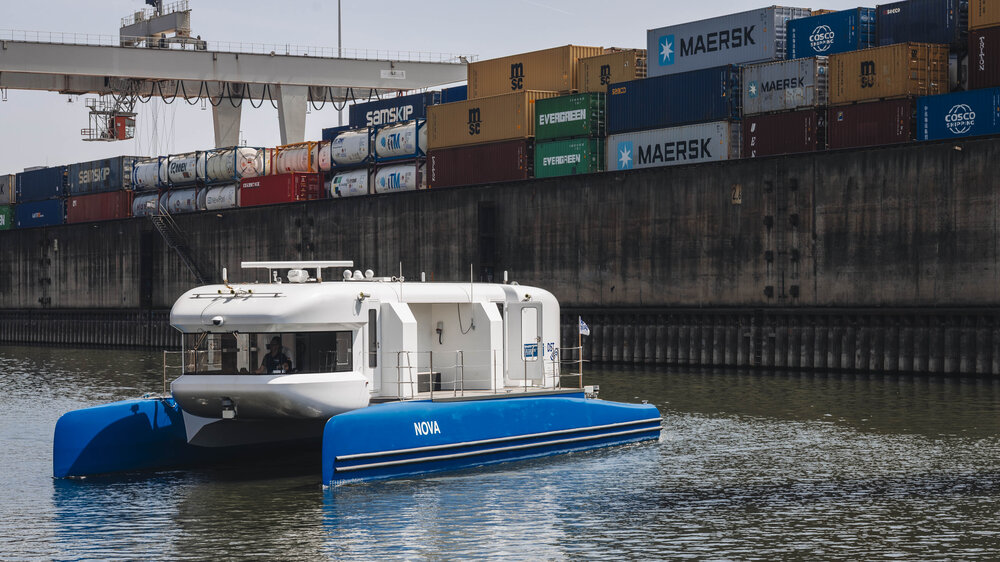
The 15-meter-long NOVA is equipped with a battery-electric propulsion unit and a solar power system. UDE and DST also use the vessel as a test platform for future autonomous navigation functions. To this end, onboard technology monitors the surroundings and other waterway users. With the help of the vessel, researchers also investigate how different driving styles affect energy consumption. In addition, they measure network coverage along the route from Arnhem to Dordrecht via IJzendoorn. An adequate digital connection is necessary for communication and remote-controlled navigation, among other things.
The voyage also served as a forum for professionals from NRW and the Netherlands to exchange ideas. In addition, it builds on the two decades of collaboration between the two regions in transportation, logistics and mobility. At several stops along the route, teams from academia, industry and government met to discuss automation, new propulsion technologies and future port infrastructure.