NRW university develops AI early warning system for hospitals
Early detection of infection outbreaks in hospitals is key to ensuring patient safety and maintaining proper hospital hygiene. As part of the VaSequIs project (Validation of Methods for Sequencing Isolates), an interdisciplinary research team at the University of Duisburg-Essen (UDE) is developing an early warning system based on artificial intelligence (AI). This system combines data from patient, drinking water and wastewater samples.
The goal is to more quickly identify pathogen patterns, classify potential outbreaks earlier and better trace chains of infection. At Essen University Hospital (UKE), AI-powered automated samplers are being used for the first time to collect wastewater samples around the clock. The samples are then analyzed using molecular biology techniques to determine their DNA sequences and assess their potential for infection prevention.
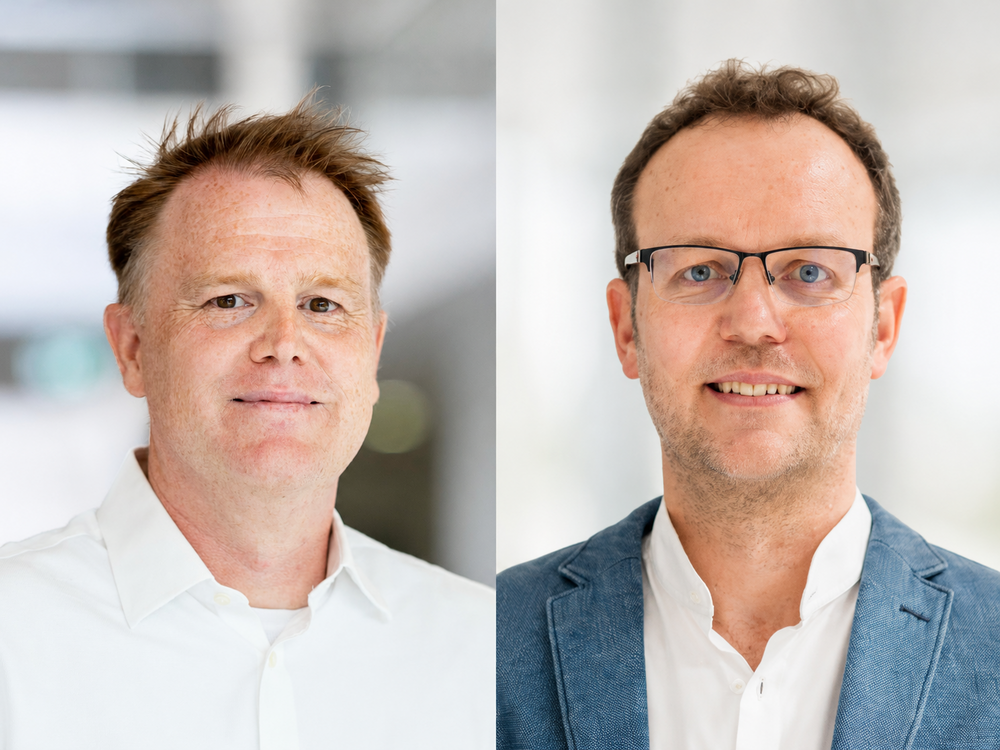
In an interview with NRW.Global Business, Prof. Dr. Jan Kehrmann from the Institute of Medical Microbiology and Prof. Dr. Folker Meyer from the Institute for Artificial Intelligence in Medicine discuss VaSequIs – the combination of sequencing and AI – and the significance of the project for research, hospitals and NRW as a hub for healthcare.
Hospitals already collect a great deal of information on infections and pathogens. What are the biggest challenges in the early detection of outbreaks today? How can VaSequIs help?
Rapid detection of outbreaks in hospitals is crucial for preventing the spread of infectious diseases, especially when the source is previously unidentified. To this end, a great deal of information is collected, including laboratory findings, pathogen detections and epidemiological data. This information is evaluated and interpreted in close collaboration with hospital hygiene departments.
The challenge lies in identifying changes at an early stage amidst a multitude of individual findings, such as the unusual occurrence of pathogens with specific antibiotic resistance patterns. New molecular techniques, such as Next Generation Sequencing (NGS) – modern, computer-assisted DNA sequencing methods – and projects such as VaSequIs, offer additional possibilities in this regard. Through NGS of freshwater and wastewater, as well as sequencing of patient isolates, changes or clusters of pathogens can be detected early. This process examines the entire genetic material in a sample rather than searching for individual known pathogens.
These approaches could serve as valuable early warning systems in the future, enabling more targeted and rapid responses. Thus, the findings from VaSequIs could form the basis for improving infection prevention measures.
How does automated or AI-based wastewater sampling at the UKE differ from conventional, sporadic testing?
No hospital is fully protected against bacterial infections. Due to the growing prevalence of antibiotic-resistant pathogens, the importance of early detection and prevention will only increase in the future.
This is exactly where VaSequIs comes in. Our goal is to stay one step ahead, which means predicting potential infection outbreaks as early as possible. To this end, we are developing AI models for individual clinics at Essen University Hospital. These models analyze continuously collected wastewater data combined with existing infection and pathogen information from medical microbiology and hospital hygiene. This adds a further dimension to the already extensive clinical data by incorporating the combined microbiome of all individuals present in a building, as reflected in the wastewater.
The real added value comes from linking these different data sources. Wastewater data is extremely complex and contains a multitude of biological signals that are difficult to evaluate reliably without modern AI methods. Combining expertise from medical microbiology, hospital hygiene and AI is necessary to identify relevant changes and trends. Based on this information, we can take action before a major outbreak develops. Initial results show that, in some cases, certain developments can be predicted several weeks in advance. Responding just a few days earlier would represent a true paradigm shift in infection prevention.
Another advantage is that data collection is completely non-invasive. We can gain valuable insights into the microbial situation within a building without placing any additional burden on patients or collecting personal data.
The fields of hospital hygiene and medical microbiology are already doing excellent work within the framework of established infection surveillance. However, these procedures are inherently time- and labor-intensive. VaSequIs is not intended to replace these procedures but rather to supplement them with an additional, continuously available early warning component. Routine wastewater analysis has already proven valuable for assessing epidemiological trends during the pandemic. With today's available AI methods, we can now leverage this potential specifically for hospital medicine.
VaSequIs unites experts in medical microbiology, AI research, hospital hygiene and the application of research findings. NRW, with its university hospitals, research institutions and strong AI capabilities, offers a particularly dense innovation ecosystem for this purpose. In what ways do projects like VaSequIs benefit from this environment? What opportunities do you see for NRW to establish itself as a leading hub for medical AI applications in Germany and Europe?
North Rhine-Westphalia has a concentration of university hospitals, research institutions and technology-oriented companies unlike any other region in Germany. This environment is invaluable for a project like VaSequIs because it brings together expertise in medicine, microbiology, epidemiology and data science in one place.
In NRW, the intersection of AI and infectious disease medicine is a particular focus. For instance, we are collaborating with the University Hospital of Münster to develop methods for predicting bacterial antibiotic resistance based on genomic data. These types of collaborations demonstrate the potential of closely networking these locations.
In addition, North Rhine-Westphalia has a robust AI research community. This allows new methods to be developed, validated and translated into clinical practice much more quickly. At the same time, AI researchers benefit from large volumes of medical data and real-world use cases. This mutual reinforcement is a key factor for success.
If VaSequIs successfully establishes itself, as is currently very likely, the next logical step would be to expand the approach to other university hospitals in North Rhine-Westphalia. Initial discussions on this are already underway. This could result in the formation of a statewide network for AI-supported infection surveillance, which would improve patient care and establish NRW as a leader in data-driven prevention and early warning systems.
Regarding AI and data analysis: In the future, could other fields benefit from VaSequIs' methods or experiences where health, environmental, or infrastructure data must be evaluated early and automatically?
Absolutely. While the AI models developed in the project were initially designed to draw conclusions about infection patterns from complex wastewater data, their underlying methods are much more broadly applicable.
We are already using similar approaches in other medical fields. For instance, we have successfully used similar models to predict treatment outcomes following organ transplants. The ability to identify relevant patterns in large, heterogeneous, time-varying datasets is not limited to infectious disease medicine.
Furthermore, the data science methods developed are suitable for numerous applications outside the healthcare sector. The goal is to reliably identify rare but relevant signals in very large, complex datasets; in other words, to find the needle in a haystack. This challenge is also present in many technical and industrial sectors.
One example is predictive maintenance of technical equipment. When sensor data is collected continuously, AI models can provide early warnings of impending failures. Similar approaches could be used for environmental monitoring, critical infrastructure and energy supply.